
Outdoor kitchen ideas are becoming increasingly popular among homeowners who want to extend their living space beyond the walls of their home. A well-designed outdoor kitchen creates a place where cooking, dining, and entertaining can happen comfortably in the backyard. With thoughtful planning, outdoor cooking areas can be both practical and visually appealing. This guide explores layout strategies, storage solutions, materials, and design features that help homeowners create functional outdoor kitchens.
Planning the Layout of an Outdoor Kitchen Ideas
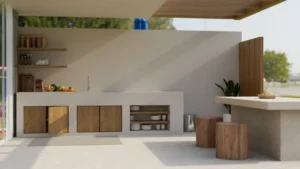
The layout is one of the most important elements of an outdoor kitchen design. A well-planned layout ensures that cooking, preparation, and serving areas work together efficiently. Without careful planning, outdoor kitchens can feel cramped or inconvenient during gatherings. By defining functional zones early in the design process, homeowners can create a space that supports both cooking and entertaining.
Outdoor kitchen layouts should also consider how people move through the space. The cooking area should remain accessible while allowing guests to gather comfortably nearby. Proper placement of appliances, seating, and walkways improves both safety and convenience.
Choosing the Right Location and Size
Location plays a key role in how an outdoor kitchen functions. Many homeowners place their outdoor cooking area close to the indoor kitchen to make food preparation and transportation easier. This proximity also simplifies plumbing and electrical connections.
Size is another important consideration. The outdoor kitchen should fit comfortably within the yard without overwhelming the available space. Even smaller patios can support compact outdoor cooking setups when designed efficiently.
When choosing a location, homeowners should consider factors such as sun exposure, wind direction, and nearby seating areas. Proper placement helps ensure that the outdoor kitchen remains comfortable throughout different seasons.
Creating Functional Cooking Zones
Just like indoor kitchens, outdoor kitchens benefit from clearly defined zones. These zones typically include preparation space, cooking equipment, and serving areas. Separating these functions helps keep the space organized during gatherings.
For example, a typical outdoor kitchen layout might include a grill station, a small sink for rinsing ingredients, and a countertop area for food preparation. Some homeowners also include a small refrigerator for beverages or ingredients. These zones allow multiple people to use the space comfortably at the same time.
By planning cooking zones carefully, homeowners can ensure that their outdoor kitchen supports both everyday use and larger social gatherings. Get a free estimate!
Outdoor Kitchen Storage and Cabinet Solutions
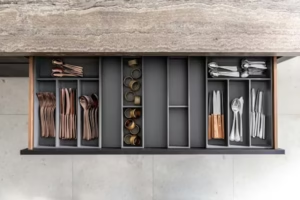
Storage is often overlooked in outdoor kitchen planning, but it plays an essential role in maintaining organization. Without proper storage, utensils, cooking tools, and serving items quickly create clutter. Modern outdoor kitchen designs include cabinets and drawers that keep essential items protected and easy to access.
Well-designed storage allows homeowners to keep grilling tools, dishware, and cleaning supplies within reach. This eliminates the need to repeatedly return to the indoor kitchen during outdoor meals.
Weather-Resistant Cabinet Materials
Outdoor cabinets must be able to withstand exposure to weather. Materials used for indoor kitchens may not perform well outdoors where they are exposed to heat, moisture, and temperature changes. Choosing weather-resistant materials ensures long-term durability.
Common materials for outdoor kitchen cabinetry include stainless steel, marine-grade polymer, and treated wood designed for exterior use. These materials resist rust, moisture damage, and fading caused by sunlight. Durable cabinetry helps maintain both the appearance and function of the outdoor kitchen over time.
Proper cabinet construction also includes sealed joints and protective finishes that prevent water infiltration. These features help extend the lifespan of outdoor storage solutions.
Hidden and Pull-Out Storage Features
Many modern outdoor kitchen designs include convenient storage features that improve accessibility. Pull-out drawers allow homeowners to organize grilling tools and utensils without digging through crowded cabinets. Sliding trays and adjustable shelves also make it easier to store larger items.
Hidden storage compartments can keep items such as propane tanks or cleaning supplies out of sight. This helps maintain a clean and organized appearance while keeping necessary items accessible.
Helpful outdoor kitchen storage features may include:
-
Pull-out drawers for grilling tools
-
Cabinets for serving trays and cookware
-
Storage compartments for cleaning supplies
-
Shelves for spices and cooking essentials
These solutions ensure that the outdoor kitchen remains both functional and tidy during gatherings. See our portfolio!
Durable Materials and Appliances for Outdoor Kitchens
Outdoor kitchens are exposed to environmental conditions that indoor kitchens rarely face. Rain, sunlight, humidity, and temperature changes can affect surfaces and appliances. Choosing materials designed specifically for outdoor use helps ensure the kitchen remains durable and attractive.
The right materials not only protect the kitchen from weather but also contribute to its overall style. Many outdoor kitchens combine natural stone, stainless steel, and durable composite materials to create a cohesive design.
Countertops and Surface Materials
Countertops in outdoor kitchens must resist heat, moisture, and staining. Natural stone surfaces such as granite are often used because they offer durability and a timeless appearance. Concrete countertops are another option that provides strength and customization opportunities.
Tile surfaces can also work well when installed correctly with weather-resistant grout. These surfaces allow homeowners to introduce texture and visual interest while maintaining durability. Selecting high-quality materials ensures that countertops remain functional despite frequent exposure to the elements.
Outdoor Cooking Appliances
Appliances designed for outdoor use provide reliability and safety. Built-in grills are typically the centerpiece of an outdoor kitchen, offering powerful cooking performance and long-lasting construction. Many homeowners also include side burners for preparing sauces or side dishes.
Outdoor refrigerators are another helpful addition. They allow beverages and ingredients to remain close to the cooking area without constant trips inside. Sinks designed for outdoor installation also simplify food preparation and cleanup. Choosing appliances specifically designed for outdoor environments ensures they perform well under changing weather conditions. Book an appointment with us now!
Enhancing Comfort and Style in Outdoor Kitchens
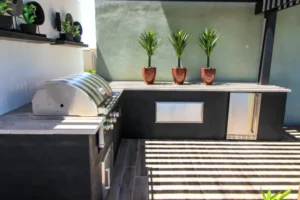
Beyond cooking functionality, outdoor kitchens should also feel comfortable and inviting. Thoughtful design features can transform a simple cooking area into a gathering place for friends and family. Seating areas, lighting, and shade structures all contribute to the overall experience.
Outdoor kitchen design should balance practicality with aesthetics. When these elements work together, the backyard becomes a natural extension of the home.
Lighting and Seating Areas
Lighting allows homeowners to use their outdoor kitchen after sunset. Task lighting above grills and prep areas ensures safe cooking, while ambient lighting creates a welcoming atmosphere for guests. Pendant lights, wall-mounted fixtures, and landscape lighting are common solutions.
Seating areas encourage guests to gather around the cooking space. Bar seating along a kitchen island allows people to interact with the cook while enjoying food and drinks. Comfortable seating arrangements make the outdoor kitchen feel like a social hub.
Proper lighting and seating help the outdoor kitchen function throughout the day and evening.
Shade and Decorative Design Features
Shade structures improve comfort during warmer months. Pergolas, covered patios, or retractable awnings protect cooking and seating areas from direct sunlight. These features also add architectural interest to the outdoor kitchen design.
Decorative elements can enhance the overall appearance of the space. Natural stone finishes, coordinated cabinetry, and thoughtful landscaping help the outdoor kitchen blend seamlessly with the surrounding yard.
Many homeowners in Fairfax and Bethesda are incorporating outdoor kitchens to create inviting backyard spaces for cooking and entertaining.
tel:+17035916757 Fairfax
tel:+1301-718-2800 Bethesda
Working with experienced designers can help homeowners choose materials, layouts, and features that complement their home’s style while ensuring durability.
Frequently Asked Questions (FAQs)
1. What is the most important feature in an outdoor kitchen?
The cooking appliance, typically a grill, is often the centerpiece of an outdoor kitchen. It determines how food will be prepared and influences the layout of surrounding surfaces. Adequate countertop space for preparation is also important. Together, these features create a functional cooking environment.
2. What materials are best for outdoor kitchen cabinets?
Outdoor cabinets should be made from materials designed to resist moisture and temperature changes. Stainless steel, marine-grade polymer, and specially treated wood are commonly used options. These materials help prevent warping, rust, or fading over time. Durable cabinetry protects stored items and maintains the kitchen’s appearance.
3. Can outdoor kitchens include refrigerators and sinks?
Yes, many outdoor kitchens include refrigerators and sinks designed for exterior use. Outdoor refrigerators keep beverages and ingredients close to the cooking area. Sinks provide convenient access to water for food preparation and cleaning. These features increase the functionality of the outdoor space.
4. How do homeowners protect outdoor kitchens from weather?
Weather protection can be achieved through durable materials and thoughtful design features. Pergolas, covered patios, and awnings help shield the kitchen from rain and sunlight. Protective covers for grills and appliances also extend their lifespan. Proper drainage and ventilation improve overall durability.
5. How long does it take to build an outdoor kitchen?
The timeline for building an outdoor kitchen varies depending on design complexity and material selection. Simple setups may take several weeks, while larger projects may require more time. Planning, permitting, and material availability can also influence the schedule. Working with experienced professionals helps ensure a smooth construction process.
Conclusion
Outdoor kitchen ideas allow homeowners to expand their living space and create a functional area for cooking and entertaining. With thoughtful planning, durable materials, and well-organized storage, outdoor kitchens can become one of the most enjoyable areas of the home. Careful layout design ensures that cooking zones, appliances, and seating areas work together smoothly.
If you are considering adding an outdoor kitchen, professional design guidance can help bring your vision to life. A well-planned outdoor kitchen enhances backyard living while providing a comfortable space for family gatherings and everyday meals. Schedule a consultation to explore outdoor kitchen designs that match your home and lifestyle.

